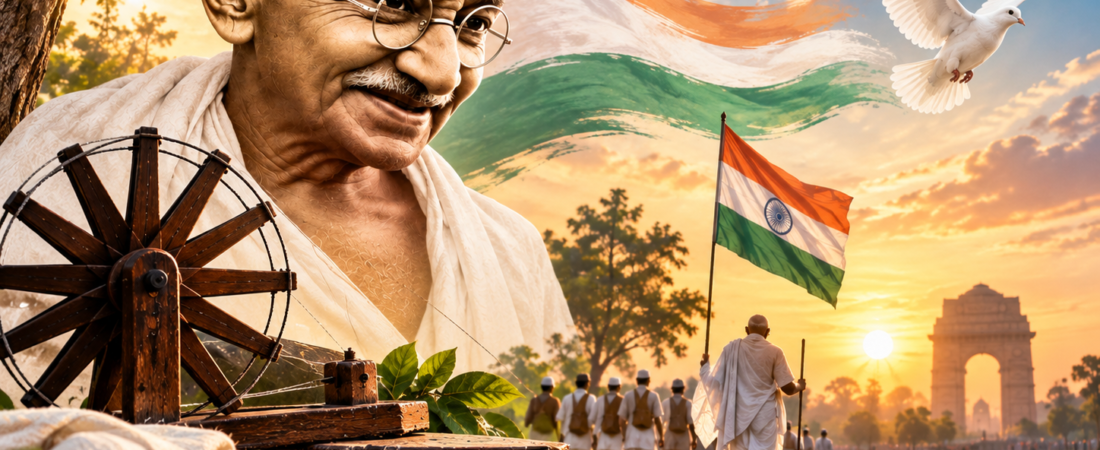
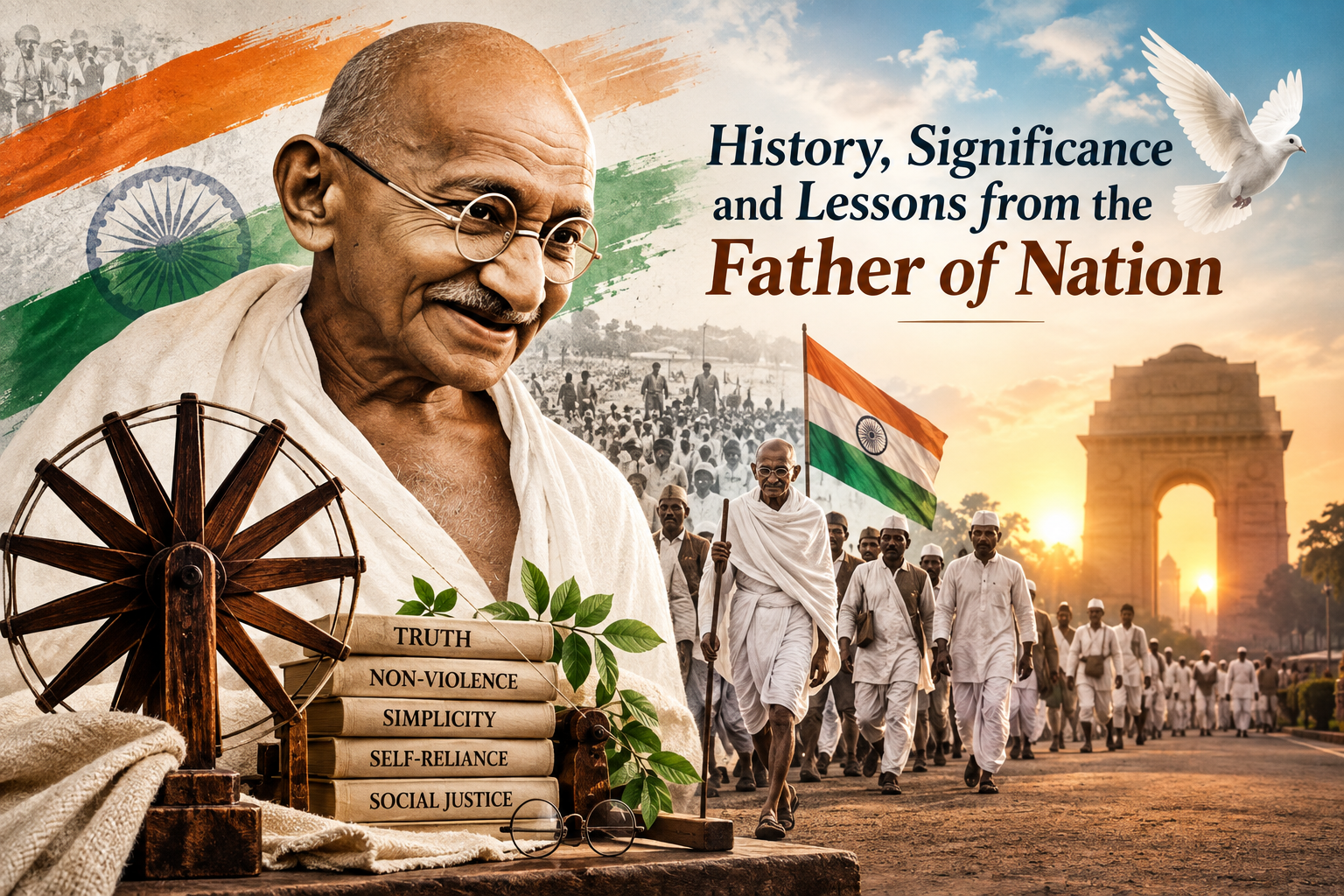
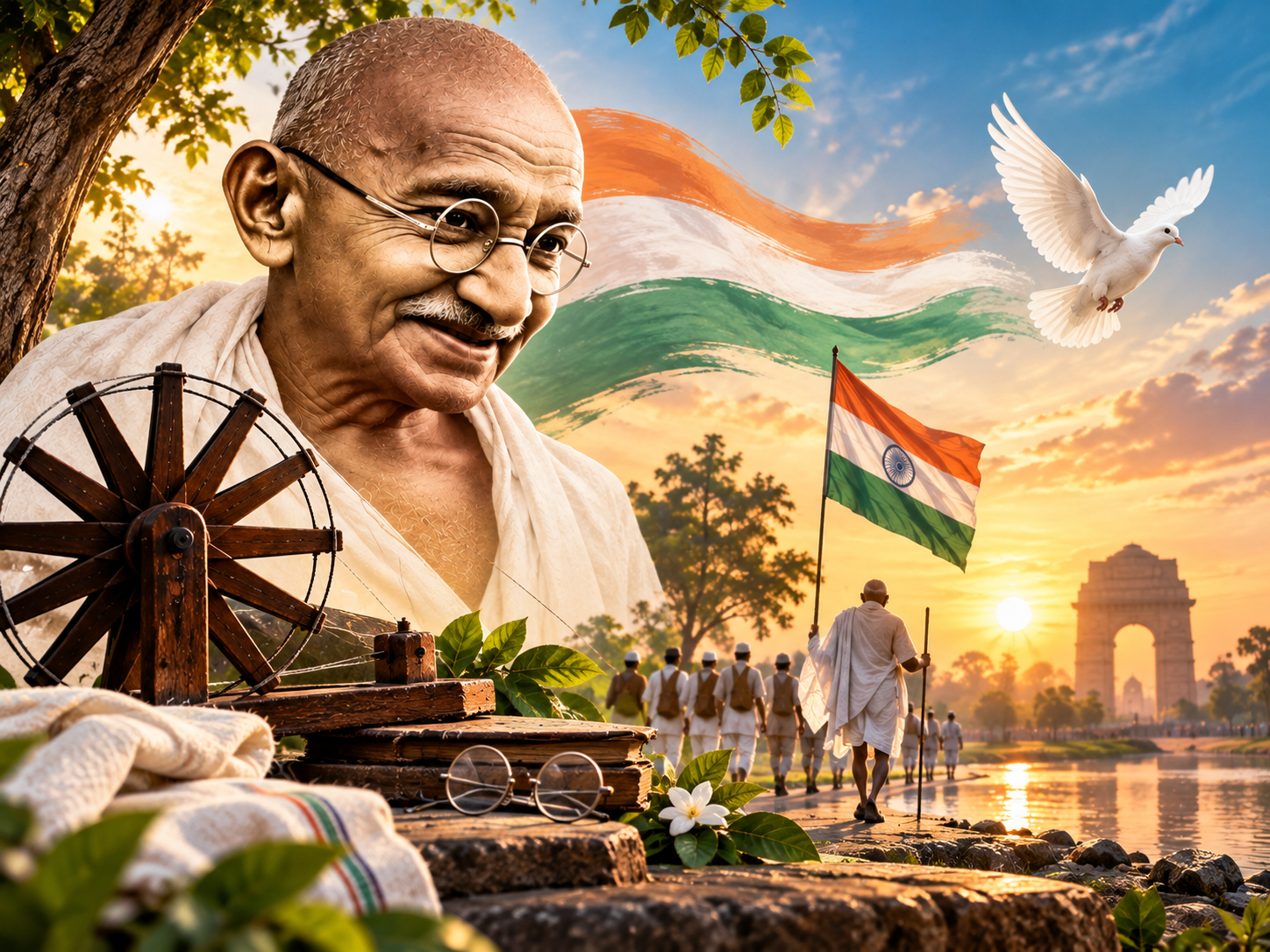
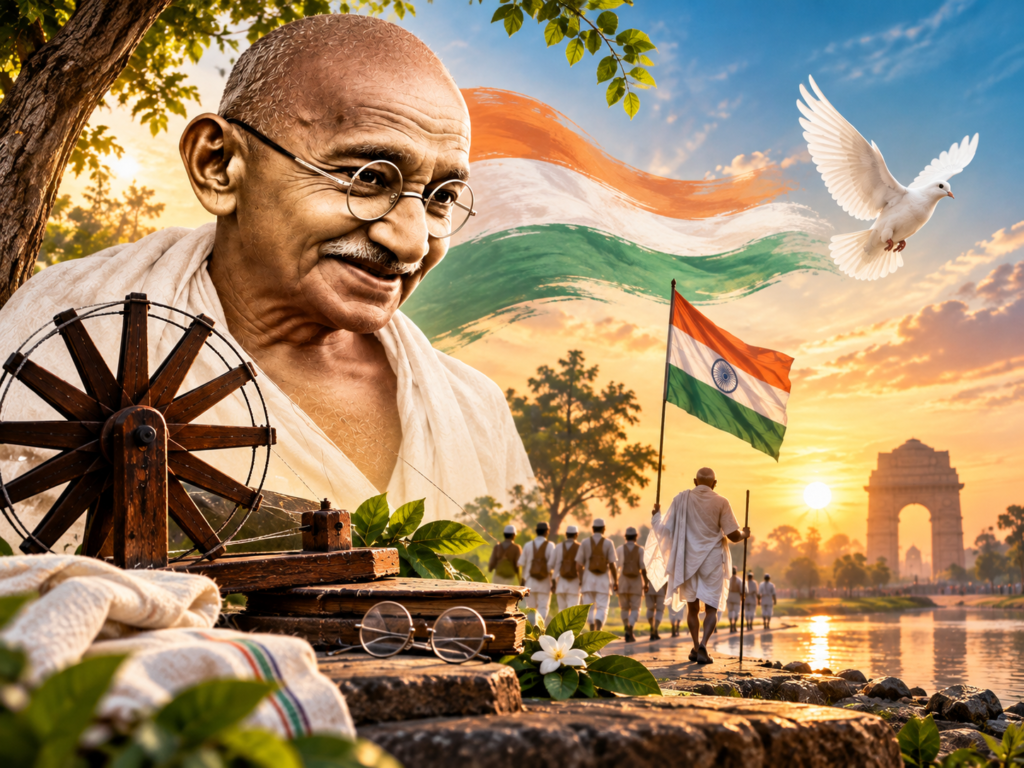
Mahatma Gandhi is one of the most influential figures in the history of India. His approach to truth, non-violence and Satyagraha became closely associated with India’s freedom movement. Gandhi was born on 2 October 1869 in Porbandar, Gujarat, and died on 30 January 1948. Wikimedia Commons documents his life, work and historical photographs. Wikimedia Commons
History of Mahatma Gandhi
Gandhi studied law in London and later worked in South Africa, where his experiences with racial discrimination influenced his approach to civil resistance. He returned to India in 1915 and gradually became an important leader in the Indian independence movement. Wikipedia
His first major political achievement in India came with the Champaran Satyagraha in 1917. Later, his involvement extended to movements such as the Non-Cooperation Movement, Dandi March and Quit India Movement. The Ministry of Culture’s Gandhi-related material also highlights these movements and Gandhi’s emphasis on peace and non-violence. India Culture
Significance of Mahatma Gandhi
Gandhi’s significance goes beyond his role in India’s freedom struggle. His method of non-violent resistance showed how organised civil action could challenge injustice without relying on physical violence. His ideas also influenced discussions about peace, social reform and civil rights beyond India. Wikimedia Commons
Gandhi Jayanti, observed on 2 October, provides an opportunity to remember his contribution and reflect on values such as truth, peace and non-violence.
Lessons from Mahatma Gandhi
1. Practice Truth
Gandhi placed truth at the centre of his personal and public philosophy. His life demonstrates the importance of being honest and consistent in one’s actions.
2. Choose Non-Violence
Non-violence was one of the most important principles associated with Gandhi. His Satyagraha movements demonstrated how peaceful collective action could become a method of protest. India Culture
3. Stand Against Injustice
Gandhi encouraged people to respond to injustice rather than simply accept it. The Champaran movement, for example, addressed the problems faced by indigo farmers. India Culture
4. Value Simplicity and Self-Reliance
Gandhi promoted simple living and ideas connected with Swadeshi, including the use of the charkha and locally produced goods. Wikimedia Commons provides historical material related to Gandhi and the charkha. Wikimedia Commons
Why Gandhi’s Ideas Still Matter
The history, significance and lessons from the father of nation continue to be discussed because values such as truth, peaceful dialogue, social responsibility and resistance to injustice remain relevant in everyday life.
Rather than simply remembering Gandhi as a historical personality, his life can also encourage us to think about how our own actions can contribute to a more peaceful and responsible society.
CTA
Want to learn more about Mahatma Gandhi history, Gandhi Jayanti significance, Gandhian principles and the lessons from Mahatma Gandhi? Explore reliable historical resources and discover more about his role in the Indian freedom movement.